Monday, July 12, 2010

Arches: architectural & engineering things of beauty

Wandering among the ruins and the cities of Syria, I was constantly reminded of just what amazing structures we humans have built. Whether buildings had been erected in Roman, Byzantine, Umayyad, Ottoman, or any other times before, during, and after (such as the Dead Cities), often all that remains of a structure are its arches . They have withstood earthquakes, wind, dust storms, neglect.
Below are photographs taken all through our trip of arches in mosques, churches, Roman temples, monasteries, other public and private buildings, walls, gates, aqueducts.

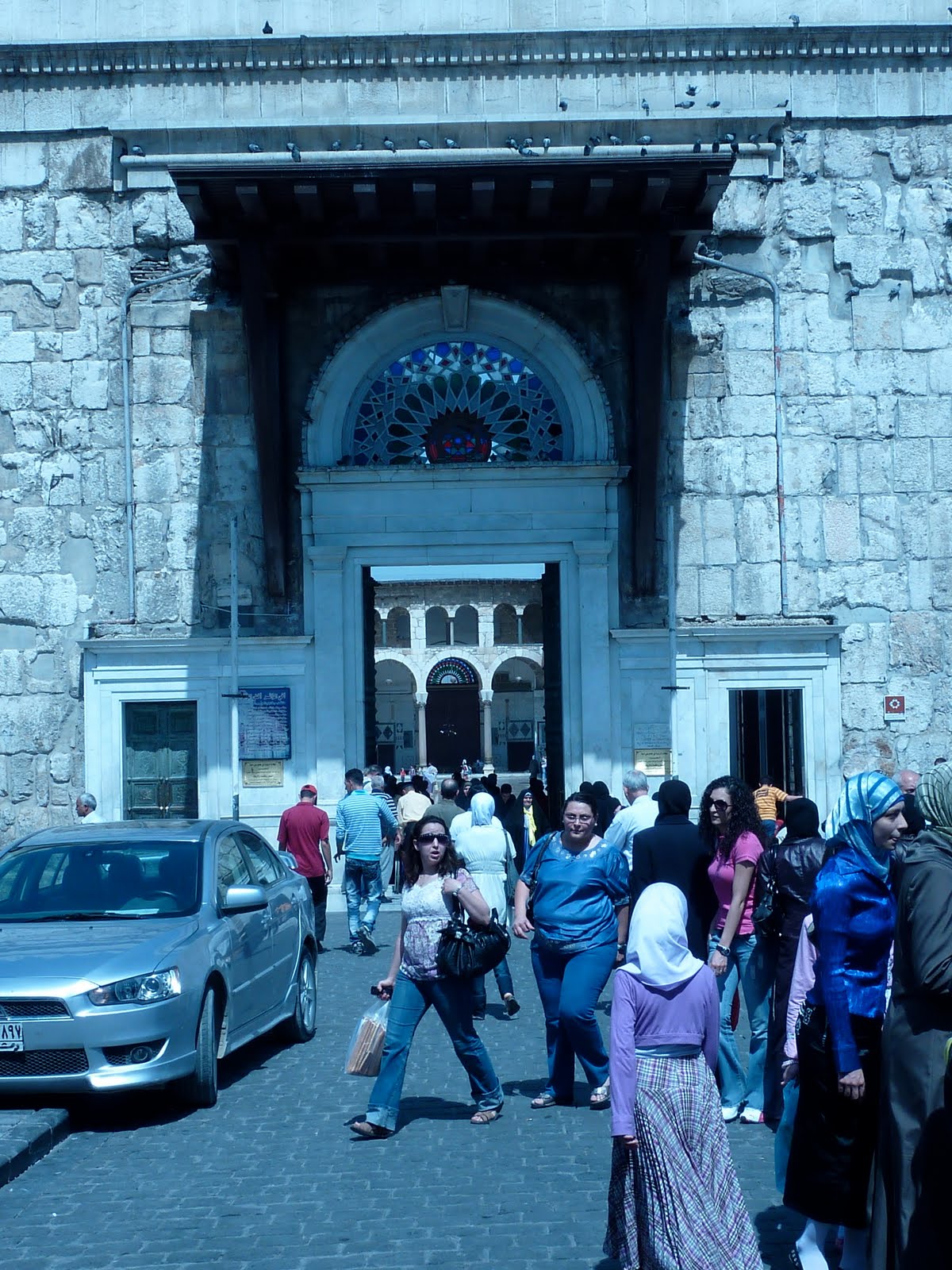
Bab Sharqi, Damascus


The Citadel, Aleppo


Roman columns & arches on the grounds of the Umayyad Mosque, Damascus


The baths, Apamea; those holes were where the water pipes came in


Old City, Hama


Grand Mosque, Damascus


Monastery courtyard, Krak de Chevalier


Khan off the Souk. Damascus


Inside St. George's Monastery


The Inn at Serjilla


The wine & olive presses, Serjilla


Church, Dead City of Serjilla


Remains of two story house, Dead City of Serjilla


Chapel ,Krak de Chevalier


Baalbek, Lebanon


Courtyard in a khan, Alepppo


Ressafa in a sand storm


Inside Ressafa


St. Simeon


At St. Simeon, north of Aleppo


Colonnade at Palmyra


The three arches, Palmyra

Friday, July 9, 2010

Searching for baskets in Syria

I am a devotee of baskets and basket makers. All cultures through time have made baskets, for utilitarian and decorative purposes. While designs and techniques may vary, there are an amazing number of similarities between cultures and geographic regions.

The first basket-sighting in Syria was made by my son at the ticket office at the entry to the Azm Palace in Hama. The man in the ticket booth indicated that these were very old baskets (there was one large, flat basket and one bowl-shaped one) and that there was a shop in Hama where we could find them....unfortunately, it was closed the day we went looking (most museums and other cultural attractions are closed on Tuesdays).

The next place we saw them was in Palmyra/Tadmor at the Traditional Palmyra Restaurant. The restaurant owner offered to take me to his cousin's shop the next day...we went to the ruins instead. Next stop, Damascus, at the government-certified craft market, the Tekke Sulimaniyah. The baskets there were very garish in colour and did not look as well-made as the older ones. At the Azm Palace in Damascus, one of the rooms displaying works by artisans in the Ottoman era, there was the most fabulous collection of baskets!...obviously, not for sale. It almost seemed that every effort I made to acquire a basket was being foiled, as I found none before we had to leave. Not one to be deterred from getting hold of a basket, a solution was found: my son and his girlfriend were going to be heading to Hama. So, they were dispatched with a mission...find mum a basket. They returned to the artists' quarter in the Old City in Hama and very late in the day found the basket shop. They were told the basket seller would be able to get there by 11 pm! So, they sat around, drank tea (a common experience with merchants and artists), and brought home three lovely old baskets for me. I found an interesting reference to Syrian baskets from 1909..check it out, as there are some great old photos.

Here is a photo of a basket maker:


And here are my three baskets:


Monday, June 21, 2010

Syria: no OSHA (Occupational Safety and Health Administration) here!

Unfinished buildings, abandoned projects, ruins and earthquakes. Those are nothing compared to the daily hazards workers and individuals face on the job and in the home. I won't even go into food handling issues. We saw many, many vehicle repair and illegal assembly "plants": mostly small scale outfits in towns and villages located in "store fronts".....think a small garage for your car at home. No ventilation. No one wearing any protective gear: exposed ears and eyes, often in sandals while wielding welding gear. We saw small construction sites creating new shops ,same thing, no gear, wires and cords everywhere. The wiring in buildings, between buildings, just hanging in and out of windows is enough to give any trained electrician heart failure. It gets cold in the winter and most houses do not have central heating. People use little pot-bellied kerosene heaters, called sobyas, that are hooked up to ducts and pipes as needed and vented to the outside.


Friday, June 18, 2010

Syria: clothing and other incidentals

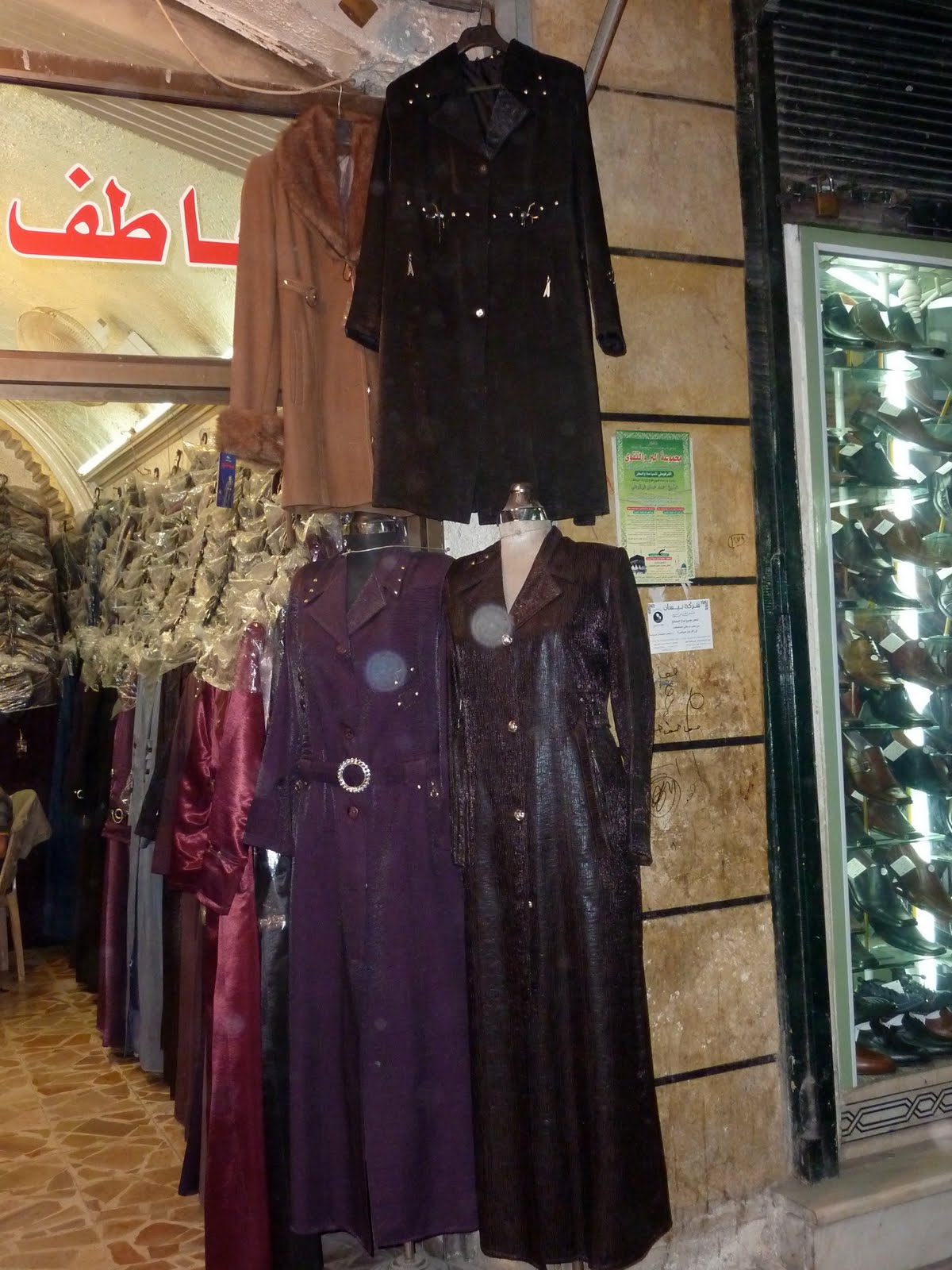
Clothing...it's complicated. And in Syria, street fashion is complicated and convoluted.
Twenty years ago, 70% of women did not "cover"; now it is just the opposite. Ten percent of the population is Christian, so they don't cover. Of the women who cover, there are different levels of covering: head scarf (hijab)and regular clothing or medium length/long trench coat, fully cloaked with head scarf, fully cloaked with face veiled (niqab). Women not fully robed wear a variety of current fashions (jeans, stilettos, crop tops over t-shirts (many with sayings in English and/or "engrish" that are very suggestive), skirts to knees. What they wear under the trench coats or cloaks is hard to know. But, on younger women, the trench coats are very tight fitting, leaving little to the imagination. The decisions made by women on what to wear, do not seem to be religious in nature, which is what makes it complicated. Some decisions are based on fashion, family pressure, the desire by women to find husbands: men tend to marry late because they have to buy a house before marriage; they marry younger women because they want children and then want their wives scarved to show unavailability to other males.

Men's attire is much like anywhere, except for those in robes and/or wearing head scarves. Young men are in jeans and t-shirts with slogans and sayings most in "engrish": there must be some factory in China that sends all its seconds and misspelled logos to Syria! Shoe fashions for hip males tends towards the looong toe, squared off at the tip.
Below are some crowd photos taken around shops in the souks, people milling, shopping, etc.

Trench coats in a shop in the Damascus souk:


What to wear under the trench coats.......


Diorama in the Azm Palace, Hama: fashion in the 1750's:


We had to rent cloaks to enter the Umayyad Mosque, Damascus:


Many fashion statements in the souk, Homs:


Locals outside the Umayyad Mosque:


Jewelry Row in the souk, Damascus:


Locals between the souk and mosque, Damascus:


Back courtyard of the Umayyad Mosque outside Saladin's tomb:


Tourists are advised to dress modestly and neatly: no knees (as in shorts or short skirts), no sleeveless tops (even if you look great in them). But, there are always those (especially if they travel in large groups and so are somewhat distant from the locals), who choose otherwise.

Tuesday, June 15, 2010

Syria: Illegal vehicles & plastic chairs

After leaving Damascus and heading north from Hama into the countryside, we began noticing very interesting looking trucks, usually with 'Hyundai' on the back, but nothing like any Hyundai we had ever seen. These were customized beyond recognition. In fact, we were to learn from one of the drivers we had hired, that they are custom built in Syria and totally illegal: not registered, not licensed: people just pay the fines if stopped by police. Some had hummer fronts; side panels that looked like, and every bit as beautiful as, Ndebele art motifs. The interiors were also customized with a highly developed sense of aesthetics. We learned that these cars are manufactured in Halfawiyah and have very powerful engines, usually Mercedes, and used mostly for trucking agricultural products or other raw materials. Here is a video of these


Other ubiquitous items included plastic chairs: every merchant in the souks sat on them, non-fancy restaurants, outdoor cafes. My favourite use of them was as carpet pegs: people hung their oriental rugs over balconies to air them out, holding them in place with several plastic chairs. Dark green seemed to be the most common colour, but we saw them in purple, white, brown.

Syria: comparative architecture

Traveling through Syria, I was continually reminded that not only is this a very ancient land, but it really has been witness to everything, in terms of human behaviour and invention, and that it has been the playground and battleground of people from virtually all over the planet.

Driving through a sandstorm from Resafa to Palmyra, we saw beehive houses. These houses are mud-built and whitewashed and cool in summer and insulated against freezing winter nights. Few of these houses are left, as they have been replaced by grey concrete blocks...far less attractive and effective. Beehive houses are also seen in Turkey, Italy (where they are called trullis), South Africa (called rondavels), Ireland, and Scotland. See the photos below. The first two photos are near Palmyra, the next in Transkei, South Africa, and the last in Alberobello, Italy.


Friday, June 11, 2010

Syria: Food

We ate delicious, fresh, well prepared food. Fresh fruits, whether made into fabulous juice drinks or offered at the end of most meals in Damascus, were abundant.

Fruit and vegetable market in Homs
The owner of the Noria Hotel in Hama advised us to stay away from parsley and mint as they frequently carry ecoli. Since parsley is in tabouli (delicious) and mint in refreshing lemonade drinks, this proved difficult.

Dinner at Layali Salihiyya, Damascus.

On only two occasions, in Homs, did we eat non-Middle Eastern food, both Italian. The first,at the Safir Hotel (not our style), was not memorable and the hotel was filled with busloads of various Europeans. The restaurant itself was located around a pool with palms overhead, bougainvillea in abundance, and lots of local businessmen. The other Italian meal in Homs, at Matrix, was excellent: food, people watching (the bags! the shoes! Sex and the City Redux!), ambiance.

In Aleppo (see descriptions/list in the Lonely Planet), as in any city of three + million people, there are restaurants at every social and price point. Even the most expensive meals we had were very cheap. We ate at Cordoba (in upscale neighbourhood), Beit Sissi (beautiful old home in Jdaideh, aka the Christian Quarter) , Al Qommeh (upstairs on fifth floor, mostly locals, live oud). One of the delights of dining in Syria arrives in the English spellings on the menus given to tourists. Fortunately, our son could read the Arabic. Eggplant is usually referred to by its French name 'aubergine', and one of our favourite menu items was 'stuffed aborigines'...this kept us going for days. Also on the menu were 'lamp chips' (lamb chops).

According to the prophet, one's fast is always broken by eating seven dates to keep ones system operating properly. After that, breakfast usually consisted of olives (black and green), hummus, yogurt (dry and wet), flat bread and often croissants and/or rolls, several types of cheese, hard boiled eggs (sometimes also beautifully thin omlettes) fruit, juices, tea, and both Syrian coffee and Nescafe.
Here is breakfast at the Talisman Hotel:


Alcohol is served in very few restaurants and then all that is found is Syrian wine (terrible) and Lebanese wine (OK) and various beers from Egypt, Europe, Russia. Beer, wine, and spirits can be purchased in the Christian Quarters of cities, a few non-Christian neighbourhoods in the larger cities. Most restaurants serve fruit-based drinks, tea, and coffee. The juice bars in all cities make fabulous fresh squeezed fruit drinks and smoothies (banana and milk based).

And desserts! Ice cream!
Here is the packed ice cream parlour in the souk in Damascus: