Saturday, April 5, 2014
Monday, July 1, 2013
Rock, Sand, and Moss Gardens
| Zen Rock Garden, Ryoan-ji, Kyoto |
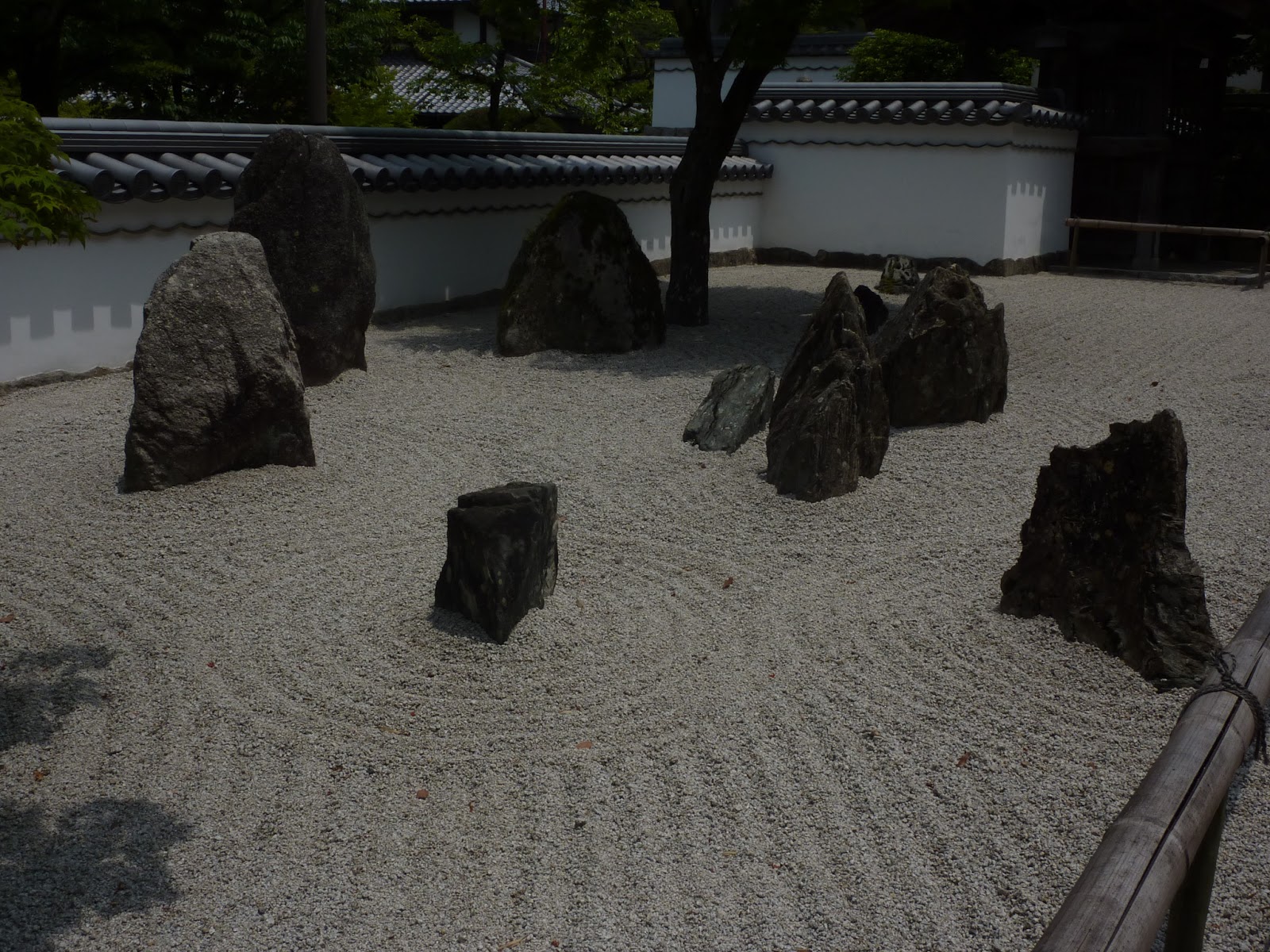
One of the delights of touring in Japan is to visit the gardens on temple and shrine grounds. They reflect the philosophies of the various Buddhist and Shinto sects, the visions of the designers, and the patience and perseverance of the monks. The first set of photos are of the most famous Zen rock garden in Japan, Ryoan-ji in Kyoto, laid out in the 15th century. There are 15 rocks set in waves of raked white pebbles, surrounded on three sides by clay walls and on the fourth a wooden veranda.
In spite of all the tourists visiting these sites and taking photos, it is possible to sit on verandas or other viewing platforms and contemplate what the the garden designer was attempting to communicate. The individuals responsible for the maintenance of these gardens leave no footprints, keep the setting serene.
| View from the veranda at Ryoan-ji. |
| Close-up of large rock at Ryoan-ji |
Nanzen-ji Temple is a Rinzai Zen temple set in a grove of cedars . It was founded in 1239.
| Nanzen-ji Temple, Kyoto |
| Sand cone at Nanzen-ji |
| Small side garden, Nanzen-ji |
| Big rock, Nanzen-ji |
| Entrance to Komyozen-ji temple |
| Rocks laid out as character for 'light' |
| Moss garden at the rear of Komyozen-ji temple |
| Play of light on moss and sand garden |
There are three reasons to visit Dazaifu in the Fukuoka/Hakata area of Japan. The first is the Kyushu National Museum; the second is the Tenmangu Shrine and Museum, the third is the Komyozen-ji Temple. The gardens from the latter are featured in this post. The temple was completely uninfested with tourists! The
temple was founded in the middle of the Kamakura Period (1192-1333) by a disciple of the founder of Kyoto's Tofukuji Temple and belopngs to the Tofukuji school of Rinzai Zen Buddhism. Both the rock and the moss gardens are some of the best we saw. The rock garden is at the entrance to the temple. The fifteen rocks form the Japanese character for 'light'. The rear garden, of moss and rock, is laid out to represent large bodies of land and water. The play of light through the trees was magical. During the autumn season, the changing colours of the maples are apparently stunning.
Wednesday, June 19, 2013
Kawara: Japanese Roof Tiles
| Hachimangu Shrine, Kamakura |
The photo, below, of Nijo Castle, built in 1603, shows end tiles, finials, and regular roof tiles. The next series of photos will be close-ups of tiles in various locations.
| Nijo Castle, Kyoto |
| Miyajima |
| Miyajima |
| Daisho-in temple, Miyajima |
| Sumiyoshi shrine, Fukuoka |
| shrine, Dazaifu |
| interesting finial |
| Kofukuji, Nara |
| Shrine, Kyoto |
| Kofukuji, Nara |
| close-up of roof tiles, Nijo Castle, Kyoto |
Friday, April 5, 2013
Friday, March 29, 2013
Another Good Book
My rating: 5 of 5 stars
A remarkable book. A remarkable writer. Kamila Shamsie has managed to weave a story beginning in Nagasaki 1945 to Delhi 1949 to Pakistan to New York and Afghanistan 2001. Her characters are a wonderful assortment. Missteps, misreadings of situations and people, the closing in of world events on the lives of ordinary people and how people cope with the fallout and outcomes: the gentleness, subtlety, and respect she demonstrates for the people, situations, and places she explores easily confirms her skill in her craft.
Monday, March 25, 2013
Book Lovers
My rating: 5 of 5 stars
A book for lovers of books and those dearest to them.
Monday, February 25, 2013
South Africa: good news and bad
The bad news first. In the wake of Oscar Pistorius' killing of his girlfriend, there has been much discussion of misogyny and the culture of violence toward women in South Africa. Read the opinion piece in the New York Times on 20 February, 2013 by Eusibius McKaiser. The Mail & Guardian has further commentary here.
Now the good news. Mampehle Ramphele recently announced that she is forming a new political party, Agang, to be launched in early June. An interview with her can be found here. Perhaps an effective opposition to the ANC can finally emerge. An open letter to Dr. Ramphele asks all the right questions and raises all those prickly issues no one really wants to face. That letter is at this link.
The winner of the documentary film category at last night's Academy Awards was Searching for Sugar Man. This is the story of a musician from Detroit, Sixto Rodriguez, who was never well known outside of the taverns he played, except in South Africa. Unbeknownst to him, a huge fan-base evolved and two people set out to find him, bring him to South Africa, and perhaps help get the royalties due to him.
Monday, December 24, 2012
The Soviets have so much to answer for....
My rating: 5 of 5 stars
Just when you think that you have read enough about Soviet slave labour camps or gulags or senseless human suffering, along comes a book that is a beautifully written testament to the pain, longing, suffering of our fellow humans. This book is about the fate of German Rumanians after WW2 and the penance they had to pay, demanded by the Soviets, for the Fascist past. The focus of the story is how people deal with persistent, long-term hunger. The author also does an amazing job describing the problems/difficulties of re-entry into a 'free' society after life in the camps. There are some interesting similarities to The Orphan Master's Son, about life in North Korea. Herta Mueller's work makes for difficult reading, but each of her books is worth the effort. No surprise that she is a recipient of the Nobel Prize for Literature.
View all my reviews
Tuesday, October 30, 2012
The perfect autumn read
My rating: 5 of 5 stars
I was so sad to come to the end of this story! This book is beautiful: the language, the landscape, the characters, the story line. The descriptions of the land, as poetic as they are, did not sound forced or romantic/nostalgic. This author has written such a wonderful book, and her first, that I am looking forward to many more by her.
Wednesday, August 29, 2012
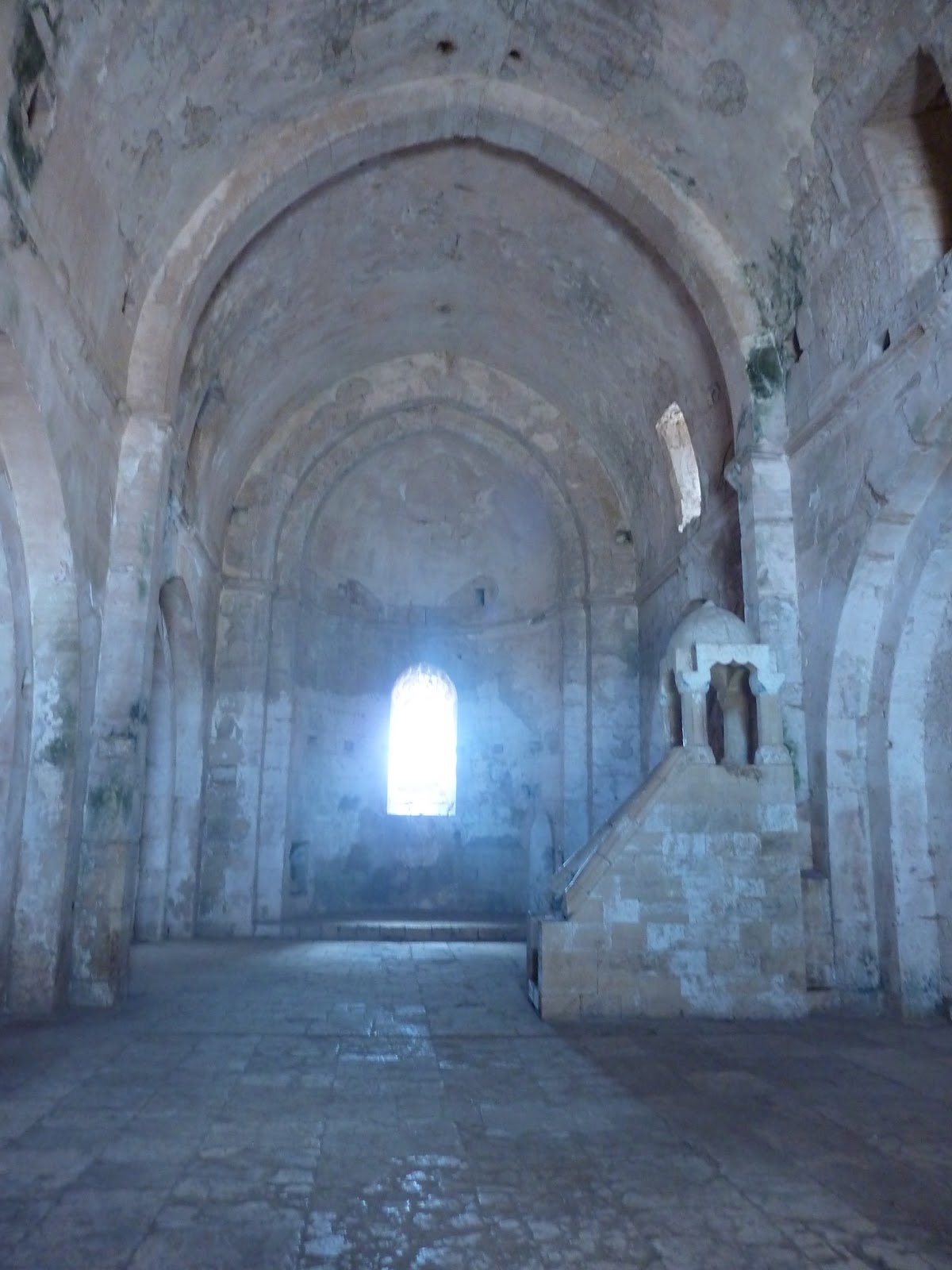
Syria: The Destruction Project
| Exterior, Krak des Chevaliers |
| Inside the wall, Krak des Chevaliers |
| Chapel, KdC |
| Temple of Bel, Palmyra |
| Beginning of the Valley of the Tombs |
| Colonnaded Avenue, Palmyra |
| Apamea |
| Apamea |
Friday, August 17, 2012
Syria is a two thousand year construction project
| Entrance to the Citadel |
| View of the Citadel entrance from the plaza |
| Courtyard of Abraham's Mosque within the Citadel grounds |
The Citadel is a UNESCO World Heritage Site, meaning it belongs to the people of the world. These are some photos we took of the Citadel in May/June 2010.
| View of the bathhouse dome within the Citadel grounds |
| The ceiling of the bathhouse dome |
| View from the Citadel of the grand mosque |
| The reception room in the Citadel |
Subscribe to:
Posts (Atom)